German Historians and the Bombing of German Cities Review
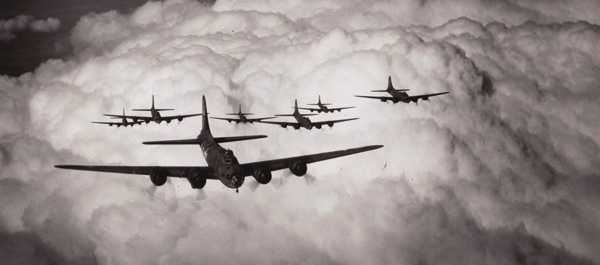
"The Bombing of Germany" is a new plan from American Experience, premiering February eight at 9:00 pm on PBS.
"The lessons we stand to larn from Earth War II are especially important today, as American troops enter the ninth twelvemonth of fighting on two foreign fronts," says American Experience executive producer Mark Samels regarding the timeliness of this program.
With all the contempo television examinations of diverse aspects of World War II in Europe—using newsreel motion-picture show, splashy graphics, talking heads so on—why is this still a fresh look at a well-covered story? There are new wrinkles hither, including some really fine colour and black-and-white film from both Allied and Axis cameras. All offset-hand accounts are taken from surviving veterans—military and noncombatant—of the bombings. Simply what stands out in "The Bombing of Federal republic of germany" is the theme, which examines the moral dilemma resulting from the style and escalation of the aeriform battery of Frg.
It was obvious to all that the advent of shipping engineering would create new levels of warfare in Earth War II, as aeriform bombing would exist employed for strategic and tactical purposes. Over the years since the war concluded much attention has been placed on the horrific state of affairs caused by the diminutive bombs dropped on Hiroshima and Nagasaki in August 1945. Launching the powerful destructive capability of atomic weapons was a shocking new strategy that ultimately—and chop-chop—led a about fanatical foe of the gratuitous world to give up.
However, for over three years conventional aerial bombing strikes were carried out in Germany to achieve similar results. As 1945 dragged on, area or "rug" bombing intensified to bring the war in Europe to a close so that the unabridged Allied endeavour could focus on defeating Japan.
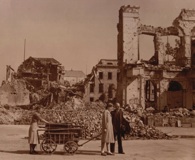 While the furnishings of explosive and incendiary devices dropped on Hamburg, Dresden and Berlin did non take the dramatic—and long lasting—effects of Fat Boy and Little Human being, the A-bombs that devastated two Japanese cities, they were but equally deadly. More than half a 1000000 people were killed by the bombings in Federal republic of germany. The city of Dresden was most obliterated. And all the same Deutschland did not surrender solely on the ground of these terror bombings.
So how did things escalate to that bespeak? As writer Donald L. Miller explains, "Wars are uncontrollable and no one knows how and why they exit of command but they practice."
When the war started, the film points out, neither Prime Minister Winston Churchill nor President Franklin D. Roosevelt desired bombing of civilian populations. A famous quote from Roosevelt fabricated on the showtime day of state of war—"under no circumstances undertake battery from the air of civilian populations"—was a warning to warring nations and is typed out on the screen in the moving-picture show. Though Germany bombed populations on the mainland from the outset, Adolph Hitler initially believed precision armed forces bombing to exist the only effective kind. The infamous bombing of London was started by one devious bomber, until Nazi propaganda minister Josef Goebbels saw potential in continuing it, explains Jörg Friedrich in the moving picture.
Equally the film traces aerial bombing in the European Theater from the get-go, the moral dilemma thrust upon military and political leaders is revealed to be like the classic knockdown of dominos. The British, ineffective in their daylight precision bombing and suffering heavy losses in shipping and personnel from information technology, champion the idea of area bombing start. American air chiefs continue to apply precision bombing techniques afterward initial success at Rouen, France, until losses of unescorted bombers start to add up. Then, slowly, they start to buy into the British concept, though in combined operations the Americans continue to concentrate on military targets in daylight. The appearance of the P-51 Mustang as a fighter escort profoundly aids this effort.
All of this is illustrated clearly in timeline fashion in the film. On-camera appearances past British and American airmen, and German civilians caught in the hailstorm, give chilling testimony to the plan'southward nevertheless and moving images of air attacks and destruction on the ground. However American Experience programs, in my opinion, often use likewise many experts on screen. That is certainly the instance here. The brusque audio bites from a variety of historians and writers dilute the thesis by overstatement. Historian Tami Davis Biddle is particularly ineffective as the first up, stating obvious facts. Her soothing voice and humanistic perspective work better later in the picture show when conclusions are drawn. On the other paw, historian Sir Max Hastings' house commentary commands attention, every bit does the engaging charm of European scholar Jörg Friedrich. Donald Fifty. Miller, author of Masters of the Air, has an easy mode that brings life to his comments.
This program makes one think a great deal about the high cost of war. It gets inside the heads of those who had to make the difficult decisions to sacrifice innocent life for victory. Just equally historian Conrad Crane reasons in the flick, "the most unethical act in World State of war II for the Allies would have been allowing themselves to lose." These concepts offering another example of why historical examinations, and specially the report of this state of war, set the tone for how mankind handles swell crises now and in the futurity.
For more information about the program, visit the American Experience Website.
To learn more than most the Allied bombing of Germany, click on the links below.
Wild Blue Yonder
Allied Aerial Destruction of Hamburg During World War Two
Allied Air Power was Decisive Factor in Western Europe
williamsthislem90.blogspot.com
Source: https://www.historynet.com/the-bombing-of-germany-on-pbs/
0 Response to "German Historians and the Bombing of German Cities Review"
Post a Comment